Gluten-Free Travel Essentials: What to Pack for Celiac-Safe Trips
Gluten-free travel requires more than just good intentions, it requires preparation.
When someone in your family has celiac disease, eating safely while traveling isn’t always straightforward. Menus can be unclear, kitchen practices vary, and even small mistakes can lead to serious health issues. Unlike eating at home, you don’t control the ingredients, surfaces, or food handling when you’re on the road.
My husband and son both have celiac disease, and after years of traveling domestically and internationally, I’ve learned that what you pack matters just as much as where you go. The right items can prevent cross-contact, reduce stress, and help you handle situations where safe food simply isn’t available.
This guide focuses on gluten-free travel essentials that actually protect your health, not trendy gadgets or products you’ll never use. Everything here is based on real travel experience and the challenges gluten-free families face on the road.
Quick Gluten-Free Travel Packing Checklist
Food Safety
- Celiac dining cards (printed, laminated, multiple languages if needed)
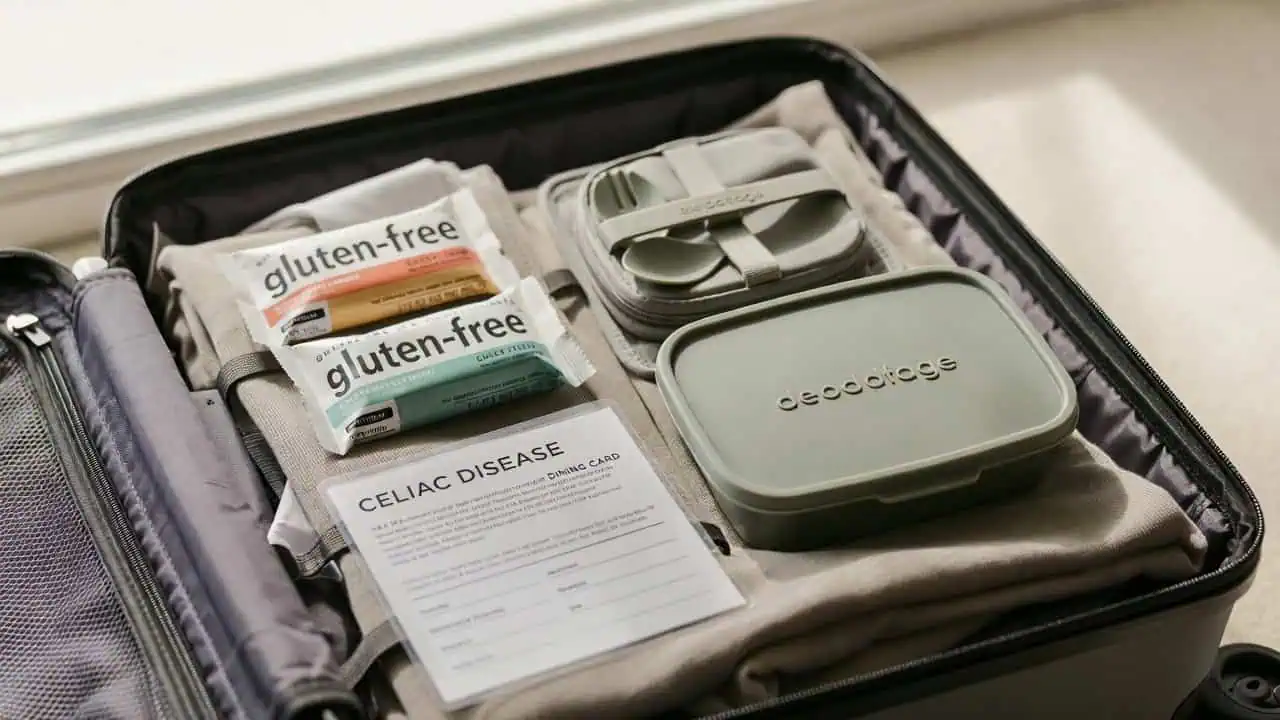
- Certified gluten-free snacks for transit days and emergencies
- Gluten-free soy sauce or condiment packets (if traveling abroad)
Cross-Contact Prevention
- Reusable travel utensils
- Collapsible or dedicated food containers
- Small, dedicated cutting board (if staying somewhere with a kitchen)
Communication & Planning
- Translation app or pocket translator
- Screenshots of key gluten-free phrases (offline access)
- Restaurant research saved ahead of time
Practical Essentials
- Reusable water bottle
- Portable power bank
- Travel document organizer (medical notes, prescriptions, diagnosis letters)
Why Packing Matters More for Gluten-Free Travelers
Standard travel advice focuses on comfort and convenience. For people with celiac disease, packing is also about safety.
You can’t always predict what food options will be available, whether restaurant staff understand cross-contact, or if you’ll have access to safe snacks when hunger strikes. Delays, language barriers, and unexpected schedule changes can quickly turn into stressful – and risky – situations.
The goal isn’t to pack for every possible scenario. It’s to bring enough tools and backup options so you can handle the unpredictable moments calmly and safely.
Food Safety Essentials
Celiac Dining Cards
A laminated card explaining celiac disease in the local language is non-negotiable, especially for international travel. I carry multiple versions when we travel abroad.
Dining cards aren’t perfect, but they give restaurant staff something clear and concrete to reference when explaining food preparation requirements.
Tip: Print several copies. Cards get lost, handed to kitchen staff, or damaged over the course of a trip.
Gluten-Free Soy Sauce Packets
Many cuisines, especially across Asia, use soy sauce even in dishes that otherwise seem safe. Since most soy sauce contains wheat, having certified gluten-free packets can make the difference between skipping a meal and eating safely.
We keep a few packets in our day bag whenever we’re traveling in regions where soy sauce is commonly used.
Portable Gluten-Free Snacks
Always pack more snacks than you think you’ll need.
Certified gluten-free protein bars, nuts, dried fruit, and crackers help us get through delayed flights, long transit days, and situations where safe food simply isn’t available.
Choose snacks with clear gluten-free certification, especially when traveling internationally. When you’re tired and hungry, you don’t want to be deciphering ingredient lists.
Kitchen and Dining Tools
Dedicated Cutting Board (Small)
If you’re staying somewhere with a kitchen, a small dedicated cutting board helps prevent cross-contact from shared surfaces. A thin, flexible board packs flat and takes up very little space.
This is especially helpful in vacation rentals or shared family kitchens.
Travel Utensil Set
Reusable utensils stored in a sealed case mean you always have a clean, trusted option available. They’re useful for takeout, picnics, airport meals, or any situation where you’re unsure about shared dishware.
Collapsible Food Containers
Collapsible containers pack flat and expand when needed. We use them for storing leftovers, packing breakfast from hotel buffets, or organizing snacks for long days out.
They’re surprisingly versatile and save space in your luggage.
Communication Tools
Translation App or Pocket Translator
Being able to ask clear questions about ingredients and food preparation builds confidence when dining out. Translation apps or pocket translators help bridge language gaps when dining cards aren’t enough.
Screenshots of Key Gluten-Free Phrases
Even if you use a translation app, save screenshots of essential phrases explaining gluten-free requirements. These are invaluable when there’s no Wi-Fi or your phone battery is running low.
Comfort and Practical Items
Reusable Water Bottle
Staying hydrated matters, especially on long travel days. Bringing your own bottle ensures you always have something safe to drink.
Compression Packing Cubes
Efficient packing creates more room for the gluten-free supplies that actually matter. Compression cubes help keep food items and tools organized and accessible.
Portable Power Bank
Your phone is your translation device, restaurant research tool, and communication lifeline. A portable power bank ensures it stays charged when you need it most.
Travel Document Organizer
Keep medical documentation, prescription information, and any celiac-related notes easily accessible, particularly for international travel. Having everything in one place reduces stress during airport checks or emergencies.
What Not to Overpack
It’s tempting to bring your entire gluten-free pantry. Try to resist.
Focus on:
- Items you can’t easily find at your destination
- Snacks for transit days and emergencies
- Tools that enable safe eating (dining cards, utensils, containers)
Most destinations have grocery stores with at least some gluten-free options. Research availability ahead of time so you don’t overpack unnecessarily.
Adjusting Your Packing by Destination
Southeast Asia
- Extra gluten-free soy sauce packets
- More dining cards
- Higher snack quantities
Europe
- Gluten-free products are generally easier to find
- Focus more on communication tools
Remote Destinations
- Emphasize self-sufficiency with snacks and kitchen tools
Beach or Resort Trips
- Communicate with resort kitchens in advance
- Bring dining cards and backup snacks
Final Thoughts
Packing for gluten-free travel is really about reducing uncertainty.
You can’t control every meal or situation, but you can prepare for the most common challenges. With the right essentials, traveling with celiac disease becomes far less stressful and far more enjoyable.
Start with the basics, learn from each trip, and adjust your packing list based on your family’s needs and your destination.
For general travel comfort, organization, and non–food-related gear, you can also see my full list of general travel essentials.